Understand
Blood sugar after eating
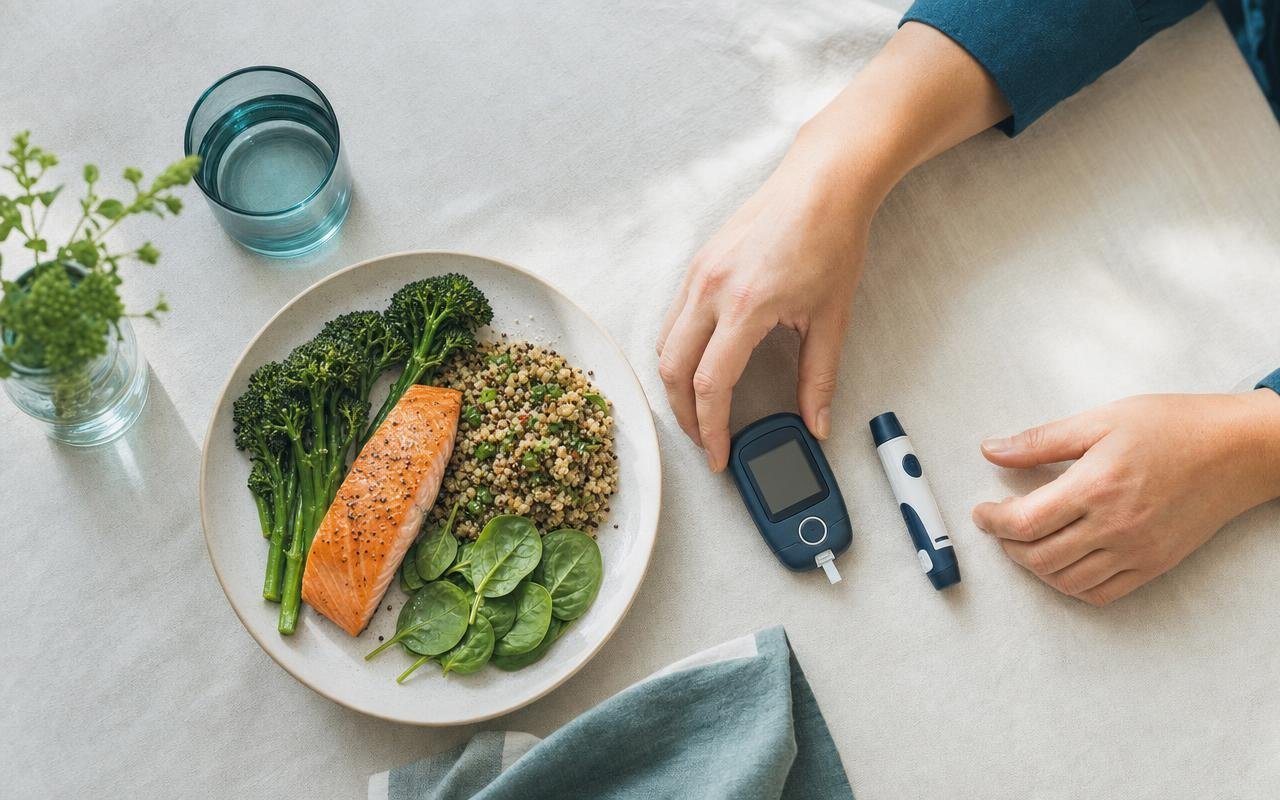
Blood sugar rises after every meal — that is digestion working, not a problem. What matters is how high it goes and how fast it comes back down. Two hours after the start of a meal, a reading below 140 mg/dl (7.8 mmol/L) is normal; 140–199 points to prediabetes; 200 mg/dl or above is in diabetes territory.
What a normal curve looks like
In a person with healthy glucose regulation, blood sugar starts climbing about 10–15 minutes into a meal, peaks roughly one hour after the first bite, and is back near the pre-meal baseline within two to three hours. The peak itself usually stays under 140 mg/dl, though a large, carbohydrate-heavy meal can briefly push a healthy person somewhat higher.
The shape of the curve is the point. Insulin's job is to move glucose out of the blood and into cells, and a working system does that quickly: up, over, and back down. When insulin is in short supply or the body has become resistant to it, the peak climbs higher and the return to baseline stretches out — the curve flattens into a plateau instead of a hill.
Why the 2-hour mark — and why it starts with the first bite
Guidelines put the measurement at two hours after the start of the meal, not the end. That sounds pedantic but changes the number: a slow dinner can take 45 minutes, and measuring two hours after dessert means measuring closer to three hours after the curve began. By then even a sluggish system may have caught up, and the reading looks better than the regulation behind it.
Two hours from the first bite is the point where the difference between healthy and impaired regulation shows most clearly. A healthy system is back near baseline; an impaired one is still visibly elevated. That is why the diagnostic thresholds — the same ones used in the 2-hour oral glucose tolerance test — are anchored there.
The two lines: 140 and 200
- Below 140 mg/dl (7.8 mmol/L) at two hours: normal.
- 140–199 mg/dl: impaired glucose tolerance — the post-meal form of prediabetes.
- 200 mg/dl and above (11.1 mmol/L): the ADA's diabetes threshold. A random reading of 200 or more, together with symptoms like thirst, frequent urination and fatigue, is itself a diagnostic criterion.
As always: a home meter reading never diagnoses anything by itself. Meters are allowed a ±15 % error, and diagnosis requires a lab test confirmed on a second occasion. A home reading in these ranges is a reason to talk to a doctor, not a verdict.
What counts as a spike, and when spikes matter
A spike is a fast, high rise after eating — typically a peak above 140 in someone without diabetes, or well above the personal target range in someone with it. One spike after a birthday cake means nothing; glucose regulation is built to handle occasional loads. What matters is the pattern: meals that push you above 140 at the two-hour mark repeatedly, or peaks that keep landing above 180–200.
Repeated high excursions matter for two reasons. First, they are an early sign that the system is losing headroom — post-meal control usually deteriorates years before fasting numbers do. Second, in people with diagnosed diabetes, post-meal peaks contribute to the long-term average that A1C measures, and with it to the risk of complications.
Why post-meal readings catch what fasting misses
Early insulin resistance often shows up after meals first. The body can still hold the overnight baseline in the normal range — the fasting readinglooks fine — while the response to an actual glucose load is already impaired. A fasting value of 95 mg/dl and a 2-hour value of 165 can belong to the same person. Screening that relies on fasting glucose alone misses this stage; that is precisely why the oral glucose tolerance test exists, and why a post-meal home reading in the 140s is worth mentioning to a doctor even when every fasting test has been normal.
How to test a specific meal
Post-meal testing is most useful as an experiment on one concrete meal, not as random sampling. The method:
- Measure right before eating. That is your baseline for this meal.
- Note the time of the first bite. The clock starts here.
- Measure at 2 hours after that first bite. Below 140 and within about 40 mg/dl of your baseline: this meal works for you. Curious about the peak? Add a reading at the 1-hour mark.
- Write all three numbers down with the meal — the journal on this site stores reading, time and a note together, which is exactly the format a doctor can work with.
Wash your hands with plain water first; a trace of anything sweet on a fingertip can add 100 mg/dl to a reading (how to test without the errors). Then test one variable at a time: the same meal with half the rice, or eaten after a 10-minute walk, often produces a visibly flatter curve — and that comparison, not any single number, is what tells you something you can act on.
Sources
- Standards of Care in Diabetes — 2026 — American Diabetes Association
- Diabetes — Fact sheet — World Health Organization
- About Diabetes — Testing — Centers for Disease Control and Prevention
Educational information, not medical advice.