Act
Fruit and blood sugar
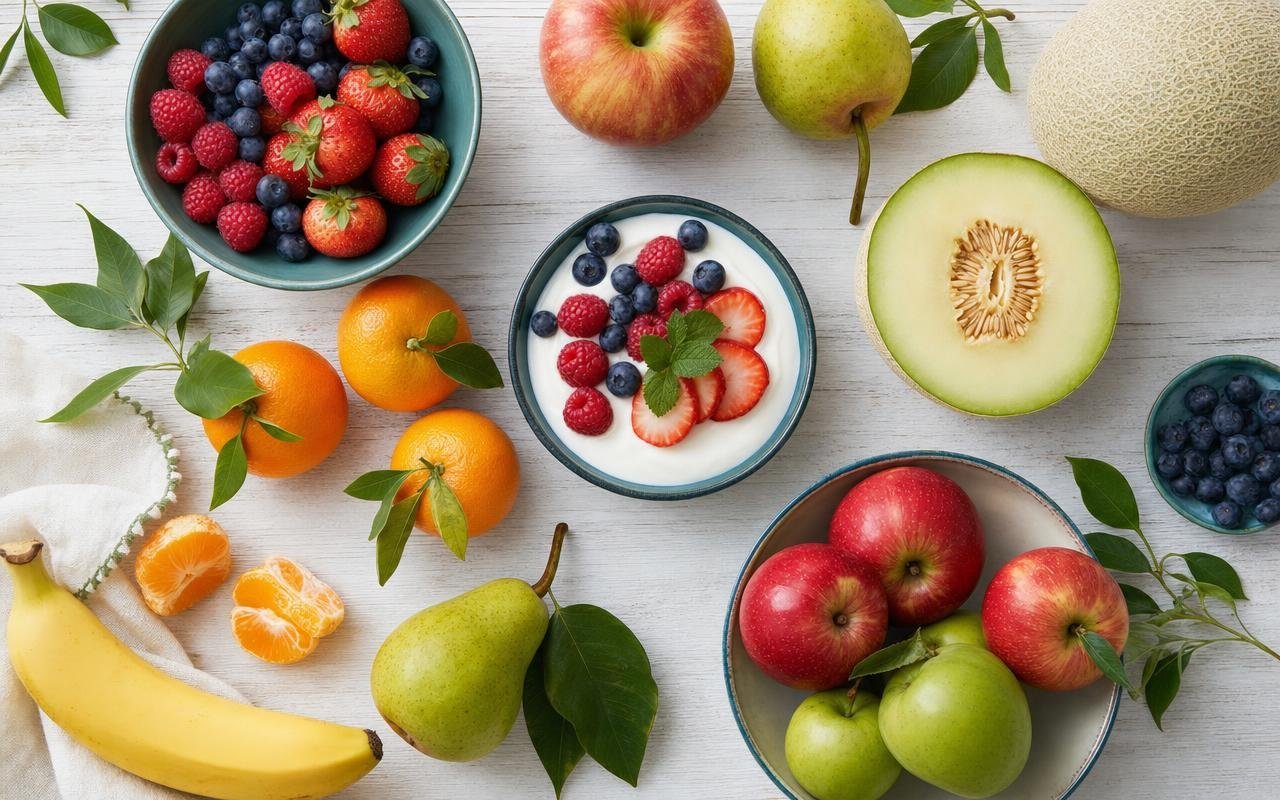
No fruit is forbidden with prediabetes or diabetes — but fruits differ a lot in how hard they hit, and the number that predicts it is not the one most charts lead with. Below: the glycemic index and glycemic load of the common fruits, and the handful of rules (whole over juice, pair with protein, watch ripeness) that matter more than any single value.
GI and GL of common fruits
The glycemic index (GI) says how fast a food's carbohydrate raises glucose (glucose itself = 100). The glycemic load (GL) multiplies that speed by how much carbohydrate a real serving actually contains — which makes it the better predictor of what your meter will show. As a rule of thumb: GL under 10 per serving is low, 11–19 is medium, 20 and above is high.
| Fruit | GI | Typical serving | GL per serving |
|---|---|---|---|
| Blackberries | ~25 | 1 cup | 2 (low) |
| Strawberries | 41 | 1 cup | 3 (low) |
| Clementine / orange | 43 | 1 fruit | 3–5 (low) |
| Pear | 38 | 1 medium | 4 (low) |
| Cantaloupe | 65 | 1 cup, cubed | 4 (low) |
| Watermelon | 76 | 1 cup, cubed | 5 (low) |
| Apple | 36 | 1 medium | 5 (low) |
| Blueberries | 53 | 1 cup | 6 (low) |
| Grapes | 53 | 1 cup (~30 grapes) | 8 (low) |
| Mango | 51 | 1 cup, sliced | 8 (low) |
| Cherries, sweet | 63 (sour: ~22) | 1 cup, pitted | 9 (low) |
| Banana, firm / greenish | ~42 | 1 medium | 9 (low) |
| Banana, ripe with brown spots | ~60 | 1 medium | 13 (medium) |
| Dried fruit (raisins, dates, dried apricots) | 30–64 | small box / ¼ cup | 14–20 (medium–high) |
Values are from the international GI tables (glucose = 100); published measurements vary by roughly ±5–10 points between studies and varieties. Notice the pattern: even the "high-GI" fruits land low on glycemic load, because fresh fruit is mostly water. Watermelon is the textbook case — GI 76, but a cup of cubes carries so little carbohydrate that the load is 5. Only two things reliably push fruit into medium-to-high territory: drying (see below) and quantity.
Whole fruit is not juice
A medium orange and a small glass of orange juice contain similar sugar — and behave completely differently. The orange arrives with intact fiber, takes minutes to chew, and empties from the stomach slowly. The juice needs no digestion at all: it is essentially sugar water with vitamins, and a 12-oz glass concentrates the sugar of three oranges into something you can swallow in thirty seconds. The same logic applies to smoothies, which blend the fiber into irrelevance. In the large cohort studies, whole-fruit eaters trend toward lower type 2 diabetes risk, while juice drinkers trend higher. If you have elevated glucose, juice belongs in one role only: treating a low, where fast is exactly what you want.
Drying does the same thing as juicing
Dried fruit keeps its fiber but loses its water — and with it, its portion control. A quarter cup of raisins is the sugar of a full cup of grapes in a few tablespoons that do not fill you up. The GI of dried fruit is often moderate (dates measure around 42, raisins around 64), but the load per realistic handful is where fresh fruit never goes. Treat dried fruit as a garnish — a spoonful on oatmeal — not a snack eaten from the bag.
Ripeness moves the number
As a banana ripens, its starch converts to sugar: a firm, slightly green banana measures around GI 42, a soft, brown-spotted one around 60. The same shift happens in mangoes, pears and most fruit that ripens after picking — sweeter taste is the audible version of the same chemistry. If bananas spike you, try them a shade less ripe before giving them up.
How much fruit per day?
Fruit is not forbidden with prediabetes or diabetes, and no guideline says otherwise — whole fruit brings fiber, potassium and polyphenols along with its sugar. What changes is accounting: a serving of fruit (one medium piece, or about a cup of berries or melon) counts as roughly 15 grams of carbohydrate toward the meal it joins. For most people, two to three servings spread across the day fit comfortably; what causes trouble is fruit concentrated into one sitting, fruit as juice, or fruit on top of an already carb-heavy meal. Two habits flatten the curve further:
- Pair it. Fruit plus protein or fat digests slower than fruit alone: apple with peanut butter, berries with Greek yogurt, a clementine after a meal rather than on an empty stomach. A handful of nuts alongside works the same way.
- Favor the top of the table. Berries and citrus give you the most volume and sweetness per point of glycemic load. That does not ban bananas or mango — it just means portion size matters more there.
If your readings sit in the prediabetes range, fruit choices are one of the easier levers — what a prediabetes result means covers the rest.
Your meter beats the table
GI values are averages of small groups; responses differ between people, and the same fruit behaves differently alone versus after dinner. The test that settles it costs one strip: eat your usual portion, measure 2 hours after the first bite, and compare against the post-meal line of 140 mg/dl — the full curve is explained in blood sugar after eating. Log the fruit and the reading (the journal here keeps that on your device), and after a few pairs you will know your list. Vegetables play by mostly friendlier rules, with two big exceptions — vegetables and blood sugar covers them.
Sources
- Standards of Care in Diabetes — 2026 — American Diabetes Association
- Diabetes — Fact sheet — World Health Organization
- About Diabetes — Testing — Centers for Disease Control and Prevention
Educational information, not medical advice.