Act
Herbs and supplements
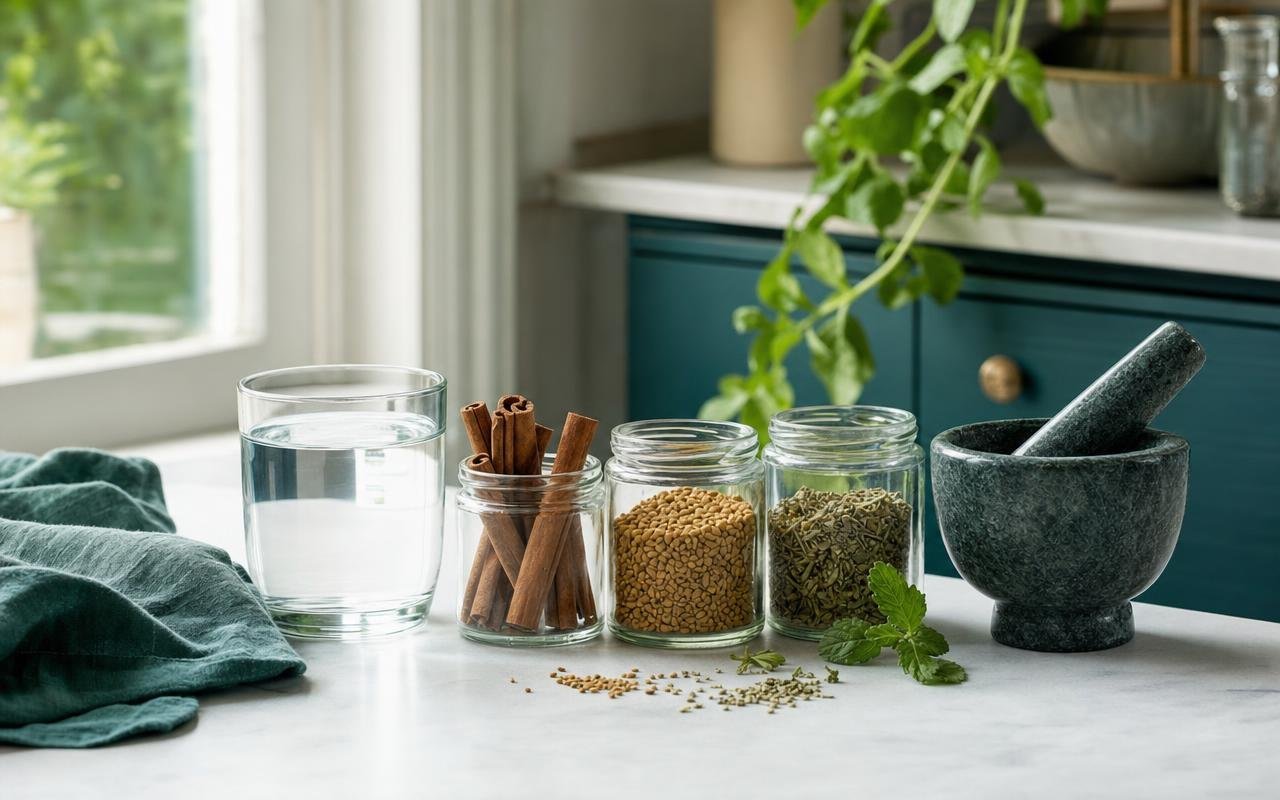
No herb on this shelf lowers blood sugar the way medication does, and most barely move it at all — trial effects are small and inconsistent across the board, with one partial exception. This page ranks the popular ones honestly, from the single supplement with genuinely notable trial results down to the ones with no glucose evidence, and covers the interactions that make "natural" different from "harmless".
The evidence at a glance
| Supplement | Evidence for lowering glucose | The short version |
|---|---|---|
| Berberine | Notable, with caveats | Real A1C effects in trials; quality and interaction concerns |
| Psyllium | Modest, most consistent | Soluble fiber; small but repeatable A1C effect |
| Cinnamon | Weak, mixed | Small fasting-glucose effect in some trials; coumarin caveat |
| Fenugreek | Weak | Small, low-quality trials |
| Ginseng | Weak | Tiny average effect; products vary wildly |
| Bitter melon | Weak to none | Mostly no better than placebo in trials |
| Bilberry | None reliable | No solid human glucose data |
| Ginkgo biloba | None | Not a glucose supplement; bleeding-risk interaction |
| Stevia | None (by design) | A sweetener — replaces sugar, doesn't lower glucose |
Berberine: the one exception worth knowing about
Berberine, a plant compound from barberry and goldenseal, is the outlier: randomized trials in type 2 diabetes report fasting glucose and A1C reductions large enough to matter — in some analyses roughly comparable to a starting dose of oral medication. The caveats are just as real: most trials are small and short, product quality is all over the map, digestive side effects are common, it interferes with how the liver processes several common drugs, and it should not be used in pregnancy or while breastfeeding. It is not in any major treatment guideline. If berberine interests you, that is a conversation to have with your doctor — not a substitute for one.
Psyllium: the best-evidenced of the traditional list
Psyllium husk is not exotic — it is concentrated soluble fiber, the same ingredient in common fiber supplements. Taken with water before meals, it forms a gel that slows carbohydrate absorption and flattens the post-meal rise. Trials in type 2 diabetes show modestly lower fasting glucose and an A1C reduction of a few tenths of a point — small, but more consistent than anything else in the herb aisle, with lower LDL cholesterol as a side benefit. It works for the same reason a high-fiber diet works, and food sources of fiber get you there too. Practical notes: always with plenty of water, and take other medications an hour before or a few hours after, since the gel can slow their absorption.
Weak or mixed evidence
Cinnamon
The most-studied and still unsettled: some trials find fasting glucose a little lower, others find nothing, and A1C mostly doesn't move. One caveat is worth knowing regardless: common cassia cinnamon contains coumarin, which can harm the liver in regular high doses — daily teaspoon-scale amounts can exceed European safety guidance. Ceylon ("true") cinnamon contains far less. Cinnamon on your oatmeal is fine; cinnamon capsules as therapy are not supported by the evidence.
Fenugreek
Fenugreek seeds are rich in soluble fiber, and small trials suggest somewhat lower fasting glucose — but the studies are few, small and of low quality. Side effects include digestive upset and a distinctive maple-syrup body odor; it should be avoided in pregnancy.
Bitter melon
Also sold as bitter gourd, karela or "bitter lemon". Despite long traditional use, the better-run trials mostly find no significant difference from placebo, and a head-to-head comparison found it clearly weaker than metformin. As a vegetable in a meal, no objection; as a treatment, the evidence isn't there.
Ginseng
Pooled trials show at best a tiny average reduction in fasting glucose, and the inconsistency has a known cause: the active ginsenoside content varies enormously between products and even between batches. You cannot dose what isn't standardized.
No meaningful glucose evidence
Bilberry
The European cousin of the blueberry, marketed on wartime folklore about pilots' eyesight. Its anthocyanins are being researched, but there is no reliable human evidence that bilberry extract lowers blood sugar. Eating the berries is simply eating fruit — pleasant, and not a treatment.
Ginkgo biloba
Ginkgo is sold for memory and circulation, not glucose — and the glucose evidence matches: there is none worth citing. It earns its place on this page for a different reason: ginkgo can increase bleeding risk, which matters if you take warfarin, other anticoagulants or antiplatelet drugs. If that is you, ginkgo belongs on the medication list you show your doctor.
Stevia: a sweetener, not a treatment
Stevia doesn't lower blood sugar and was never supposed to. Purified steviol glycosides are a zero-calorie sweetener the FDA accepts as safe — and swapping them in for sugar in coffee or baking removes the glucose rise that sugar would have caused. That substitution is genuinely useful; expecting the white powder to treat anything is not. Crude whole-leaf stevia is a different, unapproved product.
If you still want to try one
- Keep the hierarchy straight. Weight, movement, diet pattern, sleep and prescribed medication do the real work — ranked here. Nothing above replaces any of them, and a supplement is never a reason to skip or reduce a dose.
- Clear it with your care team first — especially on insulin or a sulfonylurea, where any added lowering means hypo risk and possibly a dose conversation.
- Buy third-party tested (USP or NSF seals), since no US authority checks the bottle matches the label.
- Run it as an experiment. One supplement at a time, fasting readings a few mornings a week for two weeks before and four weeks after starting, logged in the journal. If the trend doesn't move, you have your answer — and either way, you'll know instead of hoping.
Sources
- Standards of Care in Diabetes — 2026 — American Diabetes Association
- Diabetes — Fact sheet — World Health Organization
- About Diabetes — Testing — Centers for Disease Control and Prevention
Educational information, not medical advice.